c o m p o s i t e s

Lighter

Lighter Construction with GFRP Rebar by Mittal Composites
Modern construction is evolving rapidly with a strong focus on durability, efficiency, and sustainability. One of the most advanced innovations transforming the industry is GFRP (Glass Fiber Reinforced Polymer) Rebar. Recognized for its outstanding strength and lightweight structure, GFRP rebar offers a smarter alternative to conventional reinforcement materials and helps overcome many limitations associated with traditional steel.
Challenges of Heavy Construction Materials
For decades, construction projects have depended heavily on materials such as steel and concrete. Although these materials provide structural strength, they also create several practical and economic challenges.
Increased Structural Weight: Heavy construction materials add significant dead load to buildings, bridges, and infrastructure. This extra weight places pressure on foundations and structural systems, often requiring more complex engineering and additional material consumption.
Expensive Transportation: Transporting heavy reinforcement materials demands larger vehicles, greater fuel usage, and increased logistical planning, which ultimately raises overall project costs.
Slower Installation: Handling heavy materials requires specialized equipment, additional manpower, and longer installation periods, affecting project speed and productivity.
Reduced Seismic Efficiency: In earthquake-prone regions, heavier structures experience greater seismic stress, increasing the possibility of structural damage during seismic activity.
These limitations have encouraged the construction industry to adopt lightweight materials that improve efficiency without compromising strength and reliability.
Benefits of Lightweight Construction Materials
Lightweight construction solutions provide several advantages that support modern infrastructure development.
Easier Structural Design: Reducing overall structural weight lowers the load on foundations, enabling more efficient and economical design approaches.
Lower Handling and Transportation Costs: Lightweight materials are simpler to move, store, and install, minimizing transportation expenses and reducing the dependence on heavy machinery.
Faster Project Completion: Materials that are easier to handle help speed up installation processes, reducing labor requirements and shortening construction timelines.
Better Structural Performance: Lightweight structures generally perform better during earthquakes and other dynamic conditions, improving overall safety.
Enhanced Energy Efficiency: Many lightweight construction materials offer excellent thermal performance, contributing to energy-efficient and environmentally responsible buildings.
What Is GFRP Rebar?
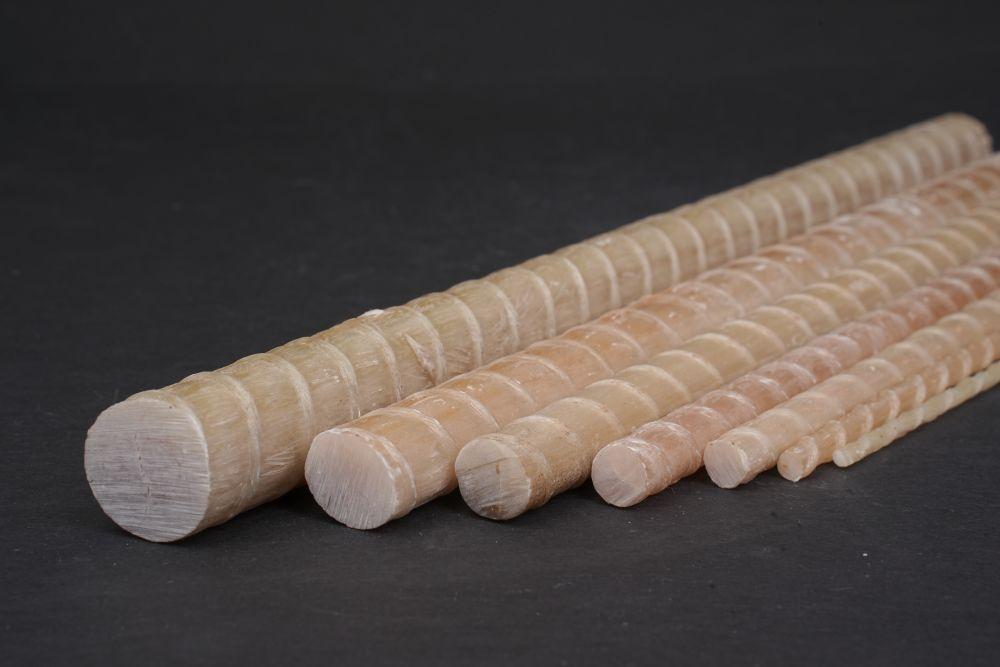
GFRP rebar is an advanced composite reinforcement material manufactured using high-strength glass fibers combined with a durable polymer resin matrix. It is designed as a modern substitute for conventional steel reinforcement and delivers exceptional performance while significantly reducing weight.
Key Features of GFRP Rebar
- Lightweight Structure: GFRP rebar is substantially lighter than steel reinforcement, making transportation and installation easier while lowering energy consumption during handling.
- Corrosion Resistance: Unlike traditional steel reinforcement, GFRP rebar does not rust or corrode, even in highly aggressive environments such as coastal, marine, or chemical-exposed areas.
- High Strength-to-Weight Ratio: GFRP rebar delivers superior tensile strength while maintaining a lightweight profile, helping create stronger and more efficient structures.
- Non-Conductive and Non-Magnetic: Its non-conductive and non-magnetic properties make GFRP rebar suitable for specialized applications including hospitals, MRI rooms, power plants, and electrical facilities.
Advantages of GFRP Rebar in Construction
Easy to Transport and Install: Due to its lightweight nature, GFRP rebar is easier to carry, position, and install on-site, reducing labor effort and machinery requirements.
Long-Term Corrosion Protection: Because GFRP rebar is corrosion-free, it helps extend the service life of structures and lowers long-term maintenance expenses.
Exceptional Durability: GFRP reinforcement performs reliably in harsh environmental conditions, making it an ideal solution for demanding infrastructure projects.
Sustainable Construction Solution: With lower maintenance requirements and reduced environmental impact compared to steel, GFRP rebar supports sustainable construction practices.
Versatile Applications: GFRP rebar is suitable for a wide range of projects including bridges, marine structures, precast components, highways, tunnels, industrial structures, and high-rise buildings.
How GFRP Rebar Supports Lightweight Construction
Bridge Infrastructure: By reducing structural dead load, GFRP rebar allows engineers to design longer spans and more efficient bridge systems with lower foundation requirements.
Marine and Coastal Structures: Its lightweight and corrosion-resistant properties make GFRP rebar highly effective for marine projects exposed to saltwater and moisture.
Earthquake-Resistant Buildings: In seismic zones, lighter structural systems improve stability and reduce the impact of earthquake forces on buildings.
Precast Concrete Components: GFRP rebar simplifies the transportation and installation of precast concrete elements, helping improve project efficiency and reduce construction time.
GFRP Rebar vs Traditional Steel Rebar
Compared to conventional steel reinforcement, GFRP rebar offers several important advantages for lightweight construction projects. It is significantly lighter, which simplifies transportation, handling, and installation. Unlike steel, GFRP rebar remains completely resistant to corrosion, even in highly demanding environments.
Its high tensile strength combined with reduced weight improves structural efficiency while minimizing maintenance costs over time. Additionally, the non-magnetic and electrically non-conductive properties of GFRP rebar make it ideal for specialized infrastructure applications where steel may not be suitable.
GFRP rebar also supports environmentally conscious construction by reducing lifecycle costs and contributing to sustainable building practices.
The Future of Lightweight Construction with GFRP Rebar
As the construction industry continues to adopt smarter and more sustainable technologies, GFRP rebar is becoming a preferred reinforcement solution for modern infrastructure projects. Its lightweight composition, durability, corrosion resistance, and long service life make it an ideal alternative to conventional steel reinforcement.
Whether used in bridges, coastal developments, commercial buildings, or industrial infrastructure, GFRP rebar from Mittal Composites provides a reliable and future-ready solution for advanced lightweight construction.
GFRP Rebar Advantages

Corrosion Resistant

Stronger

Lighter

Cost Effective

Zero Maintenance

Longer Life Span

Eco Friendly

Dielectric

Easy To Transport

Water Resistant

Less Thermal Expansion

Radio Transparent

Durable

Lower Installation Cost

Easy Site Handling & Easy Cutting

Faster And Safer Installation

Reduced Concrete Coverage